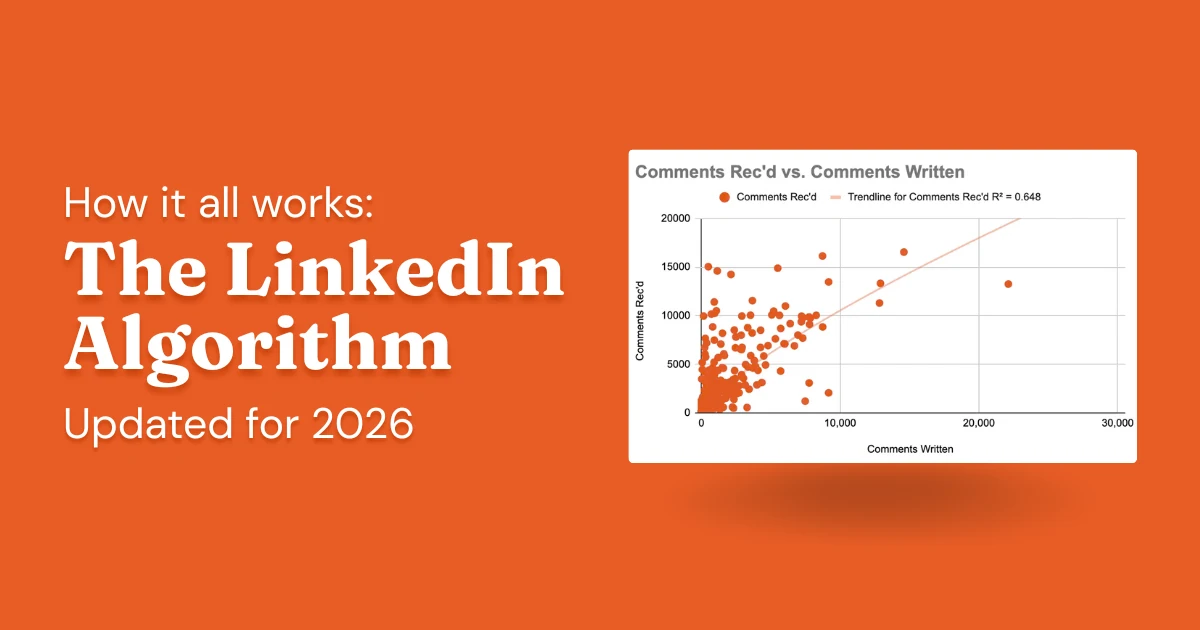
The 2026 LinkedIn Algorithm, tweaked to the version that is called "360Brew", is designed for one main goal: keep users engaging with content on the platform, so that they click ads and buy Premium licenses. But it's a little different than it used to be. When I was starting out on LinkedIn in 2017-2019, the platform would reward you more based on followers, and you could 'depend on' a certain amount of engagement and reach. These days? It's every post for itself!
I've sourced over $8M in revenue directly from the LinkedIn platform, organically (not with ads) since 2017. I'll teach you my understanding of the algorithm so that you can learn from what I know. Here's where to start.
LinkedIn Shows Posts On a Topic Interest Graph With "Reach Thresholds"
Rather than showing your posts to all your followers, LinkedIn builds a topic interest graph: a model of what each user cares about based on their profile, connections, and behavior. Your post is then shown in expanding waves to audiences likely to engage. Each wave has an implicit reach threshold: if enough people engage, the post advances to the next wave. If they don't, it stops. This is why two posts from the same creator can get 500 impressions and 50,000 impressions respectively. It's not random.
Two layers govern what gets shown: an automated system that filters and ranks posts before they reach anyone, and (rarely) a human editorial layer that can push an already-viral post to a much wider audience. That second layer almost never applies to you. Focus on the first one.
Before any post reaches an audience, LinkedIn runs it through an automated quality check. Overloaded hashtags, tagging people who have nothing to do with the content, or publishing two posts within twelve hours of each other all trigger red flags. Cross those lines consistently and your distribution quietly dries up: the effect creators call being "shadowbanned."
One underperforming post isn't a shadowban. If you normally pull 3,000 impressions and a post lands at 800, the content probably just didn't connect. That's normal. Keep reading.
From there, the algorithm applies three ranking factors to decide how widely a post gets distributed:
Niche Expertise and Network Relevance
LinkedIn builds a model of who you are from your profile, your connections, and the accounts you engage with. That model determines what you see, and who sees you. Post consistently on one topic and the platform starts routing your content toward other people who care about that topic. Scattered posting across unrelated subjects makes that model fuzzy, which tends to hurt distribution.
Content Relevance and Attention Signals
The platform scores posts on signals that indicate genuine interest: how long someone actually reads or watches (dwell time), whether the post generates real back-and-forth in comments, and whether the topic connects to what that viewer cares about. Posts that keep people on-platform rank above posts that send them somewhere else, which is why native content consistently outperforms links.
Your Interaction History
Every comment you leave, every post you expand, every account you interact with trains your feed. LinkedIn tracks what you've paid attention to and keeps serving you more of it. Your connection list is one factor, but your actual behavior in the feed carries more weight than who you follow.
So how do you attract more likes from non-connections? Three things:
Open with a pattern interrupt, not a context-setter. Non-connections don't know you. They have no reason to keep reading unless the first line earns it. Lead with the insight, the counterintuitive stat, or the uncomfortable truth, not the setup.
Use topic-native language. LinkedIn's Interest Graph identifies content relevance through the language you use. If you write about your niche in the way your niche actually talks (e.g. specific terminology, real industry references, insider framing) you'll get surfaced to the right strangers.
Write for the lurker, not the commenter. Most people on LinkedIn never comment. They scroll, read, and sometimes tap like. Your post should be satisfying to consume even without interaction. If it only makes sense in the context of a comment thread, you're writing for the wrong audience.
Do More Followers Mean More Reach?
Kind of. But here's the main point: a larger follower count does not reliably translate to more reach.
Here's a concrete way to think about it: I'm connected to around 20,000 people, but I probably only see 1,000–3,000 posts a month in my feed. That means the vast majority of people I follow never show up in front of me at all. LinkedIn isn't trying to surface everything from everyone you've connected with; it's trying to surface what it predicts you'll actually engage with. A follow is a weak signal. Behavior is the strong one.
The math isn't complicated: US LinkedIn user growth runs at roughly 1% annually, while ad revenue is growing at 10–15% per year. Add in a surge of creators chasing organic attention, and there is a lot less organic reach to go around than the user base growth rate might suggest.
The result: organic reach per creator is contracting. More people are connected to more people, but the total amount of feed attention hasn't grown proportionally. The pool isn't expanding; it's just getting divided among more claimants. Expecting follower count to reliably predict reach is going to become a worse and worse bet over time.
Research: Reach vs. Follower Count
Among the top 10 creators by reach in our research, 95% had over 40,000 followers. Of the rest, fewer than 5% hit that mark. A very strong relationship. But it only works one way.
Engagement drives follower growth, not the other way around. A large follower count is a lagging indicator of past performance. It doesn't protect your future reach as competition for feed attention increases.
Every post starts with a small test audience: people the algorithm thinks are likely to engage. If they do, the post gets pushed further. If they don't, it stops. That's why early engagement rates look inflated and then drop as the post reaches a wider pool. With creator volume rising and total feed attention fixed, the platform has to pick winners. Being a follower doesn't guarantee you'll see someone's content anymore; it just makes it slightly more probable.
Who is Gaining Reach and Who is Losing It?
Data from our research shows that some creators are gaining reach (sometimes a lot) and some are losing. Most are in about the same ballpark as before, or slightly down. Here's how the distribution looks:
Yearly Change in Avg Reach
each dot represents one LinkedIn user
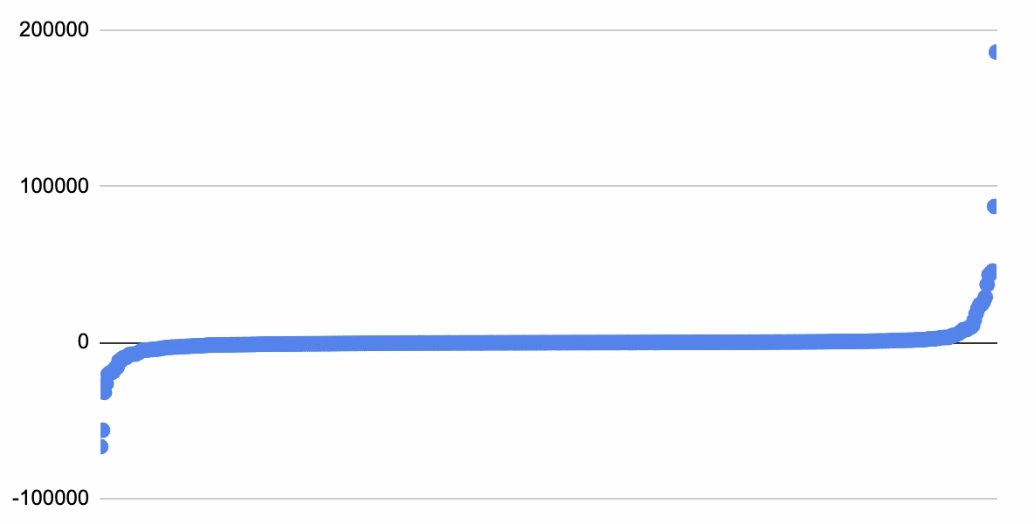
- ~20% of creators have seen reach drop by half or more year-over-year
- ~22% are down somewhere in the 25–50% range
- ~12% are in modest positive territory (0–25% growth)
- ~14% have seen reach grow 25–100%
- ~14% have more than doubled their reach
Yearly Change in Avg Post Reach, Grouped
n=484
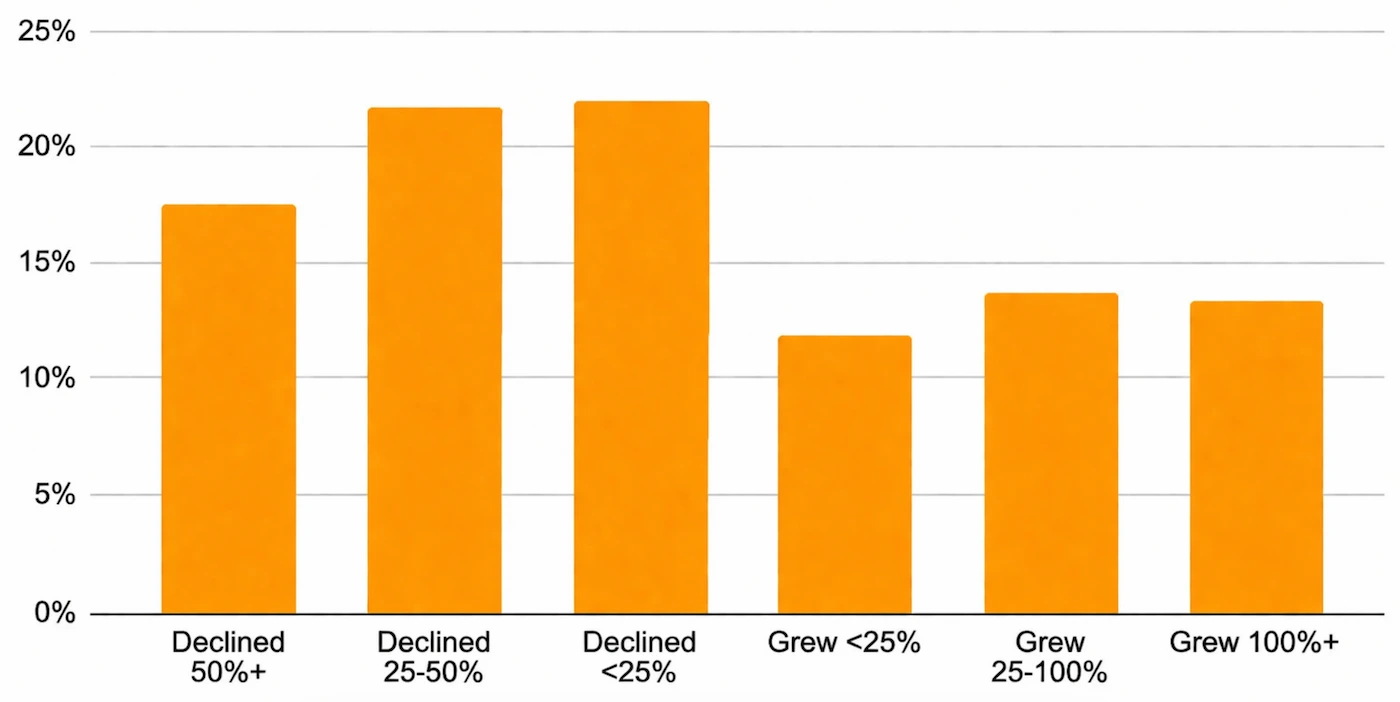
The takeaway isn't pessimism. Yes, average reach is tighter. But the creators gaining ground are gaining a lot of it, and they're doing it in the same environment everyone else is operating in.
Recent Algorithm Updates (2026)
LinkedIn has said they'd penalize engagement bait ("smash like if you agree," "comment YES for the resource"), and they have, to a degree. The enforcement is real but uneven. What's shifted more decisively is how much the algorithm weighs early performance: a post that picks up momentum in the first hour gets pushed aggressively to wider audiences. The flip side is sharper variance in how long a post stays alive: it either fades fast or keeps circulating for days.
Hour one is make-or-break. The days after a post matter more than they used to. The middle stretch (hours 2 through 24) has become less decisive.
Why Hashtags Don't Move the Needle
LinkedIn no longer routes content through hashtags in any meaningful way. The algorithm infers topic relevance from the actual words in your post, who engages, and what they care about. Hashtags are leftovers from an older system. One or two won't hurt you, but they won't do anything either; they make posts look dated.
2. How Engagement Moves the Algorithm
The LinkedIn feed algorithm runs on engagement, but it discriminates heavily between types. A hundred reactions matter less than ten substantive comments. Here are the signals that actually move the needle:
Substantive Comments Drive the Most Reach
A 40-word comment from someone in your industry that actually adds to the conversation is worth far more than ten reactions. Real discussion (where people respond to each other, disagree, ask follow-up questions) is the strongest quality signal LinkedIn has. The gap between "Great insight!" and a genuine reply is increasingly detectable. Write content that gives people something worth weighing in on, then stay in the thread when they do.
Engagement Pods Will Get You Shadowbanned. In our dataset, accounts running automated pods end up with their posts shown to an extremely small audience regardless of how many reactions they accumulate. Pod-fueled posts regularly show up with 100–200 reactions against fewer than 500 impressions. A terrible ratio, and the account suppression that follows is slow to lift.
Reshares Carry the Most Weight
Someone reposting your content with their own commentary is the best distribution you can get: it drops you in front of a new audience with an endorsement attached. The inverse doesn't hold: if you're the one doing the reposting, don't expect much reach for yourself. Resharing other people's content is a generous act that tends to go nowhere for your own numbers. If reach is the goal, keep it to a small fraction of what you publish.
Time Spent on Your Post
The longer someone stays on your post (reading past the fold, watching through a video, swiping through slides), the stronger the ranking signal. LinkedIn's business model is built on keeping people in the feed to serve ads, so time-on-post gets rewarded directly. Short paragraphs, a strong opening that earns the "see more" click, and formats that require scrolling all work in your favor here.
Early Reactions and Velocity
Reactions are a lighter signal than comments, but velocity matters as much as volume. A burst of activity right after posting tells the algorithm the content is landing, which triggers broader distribution. That first hour after you publish is when the post gets evaluated. In my experience, fewer than 500 impressions in hour one usually means the post won't break out. Clear that threshold and the second and third hours tend to follow.
If You Use Engagement Bait, Deliver on It
Explicit prompts ("hit like if this resonates," "comment YES for the template") will get penalized over time even if any single post still performs. The pattern gets flagged. A better approach is writing content that naturally provokes a response: a take worth disagreeing with, a question your audience actually has opinions on, a data point that surprises. No manufactured ask required.
Lead Magnets: How Do They Work?
We tested out a lead magnet post of roughly similar quality, format, and media roughly 10 months apart (in early 2025 and late 2025). The conclusion:
- Down ~46% reach
- Up ~18% reactions
- Down ~10% comments
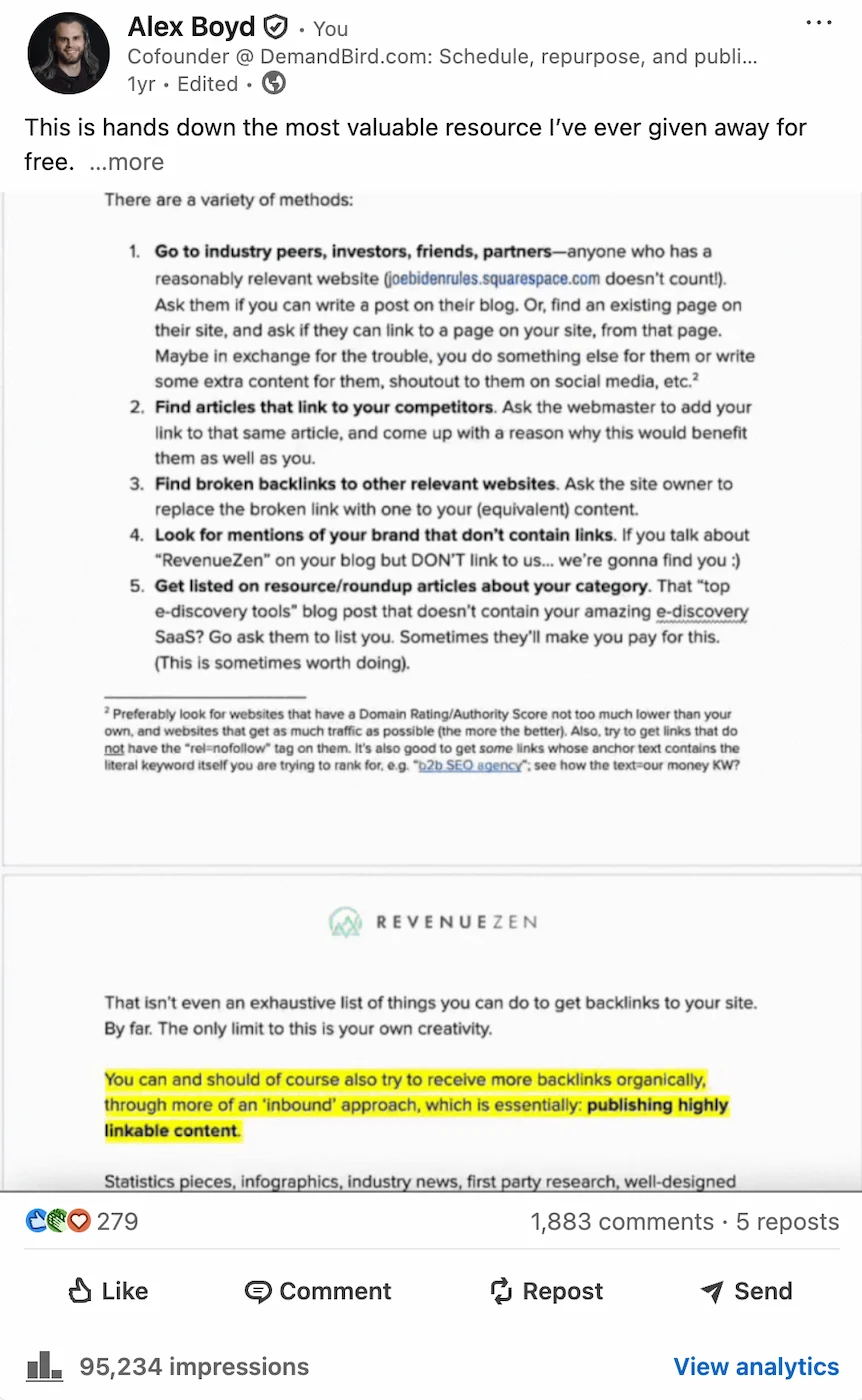
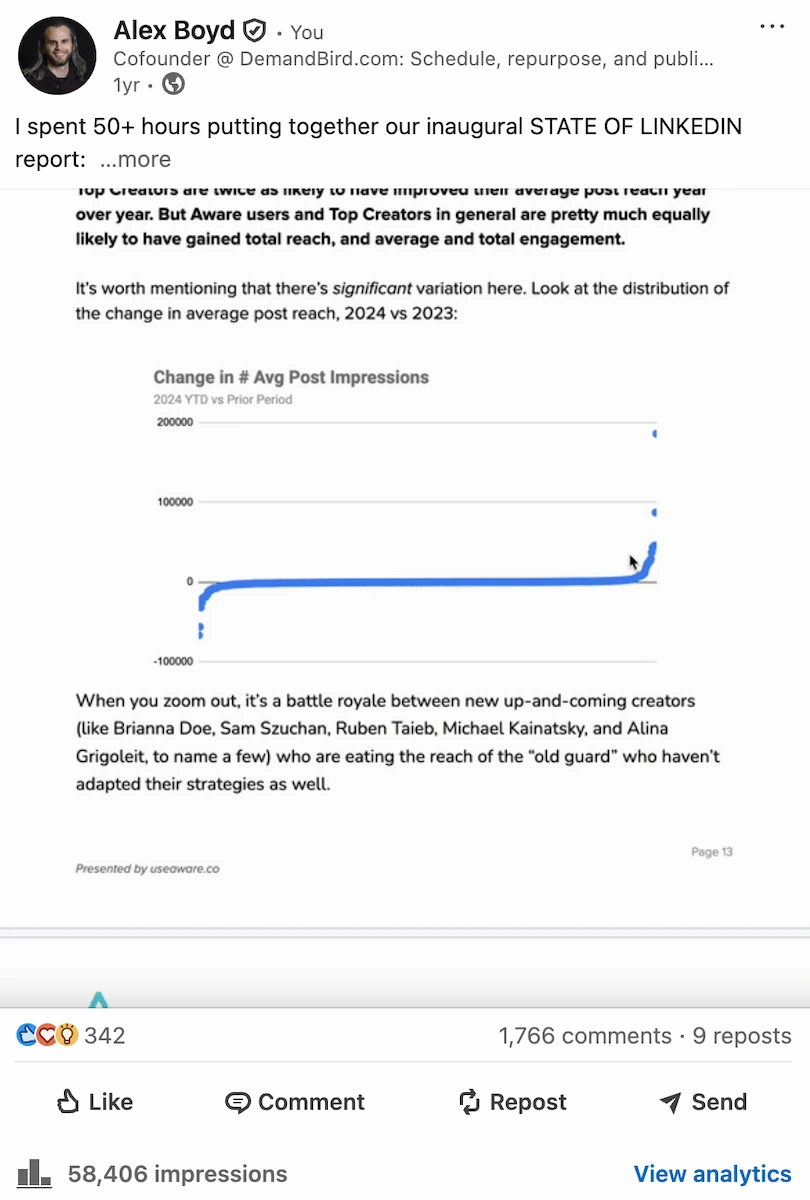
There was a moderate "reach penalty" around asking for engagement in recent months versus a year prior. But the amount of engagement this generated was still far above average. While LinkedIn may "not want you" to post these kinds of formats, they still work.
Just make sure you deliver. User signals are an algorithmic proxy for people's trust in you. If you deliver, that creates trust and an algorithm boost for you.
Why Commenting on Others' Posts Matters
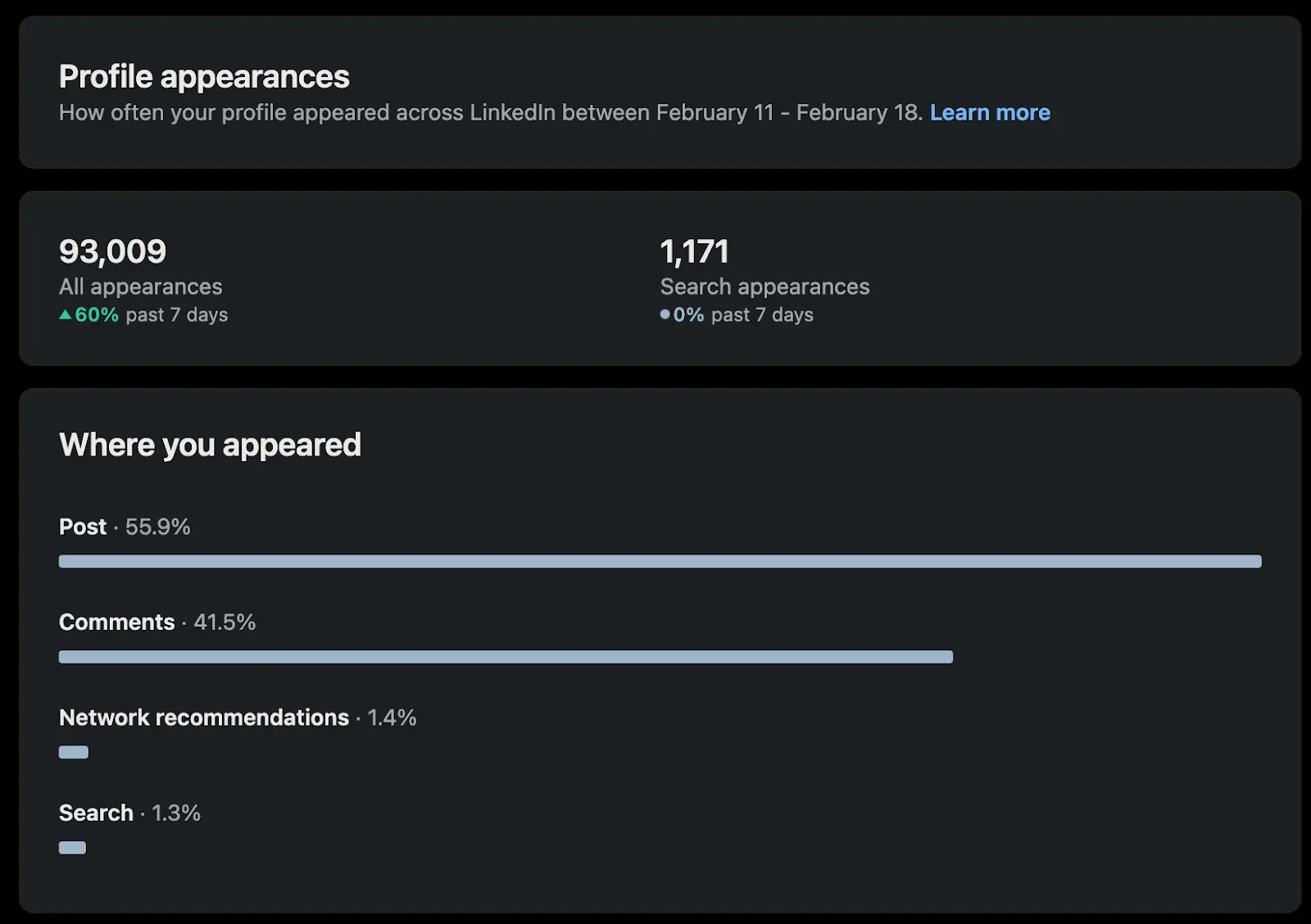
Commenting on other people's posts doesn't just build goodwill; it actively surfaces your profile to people who've never seen your content. Your headline appears under every comment you leave. A sharp comment on a high-traffic post can generate more profile views in an hour than a week of your own posts. Some creators report that their comment activity drives nearly as much profile visibility as their posts do.
Does Your Activity Level Affect Reach?
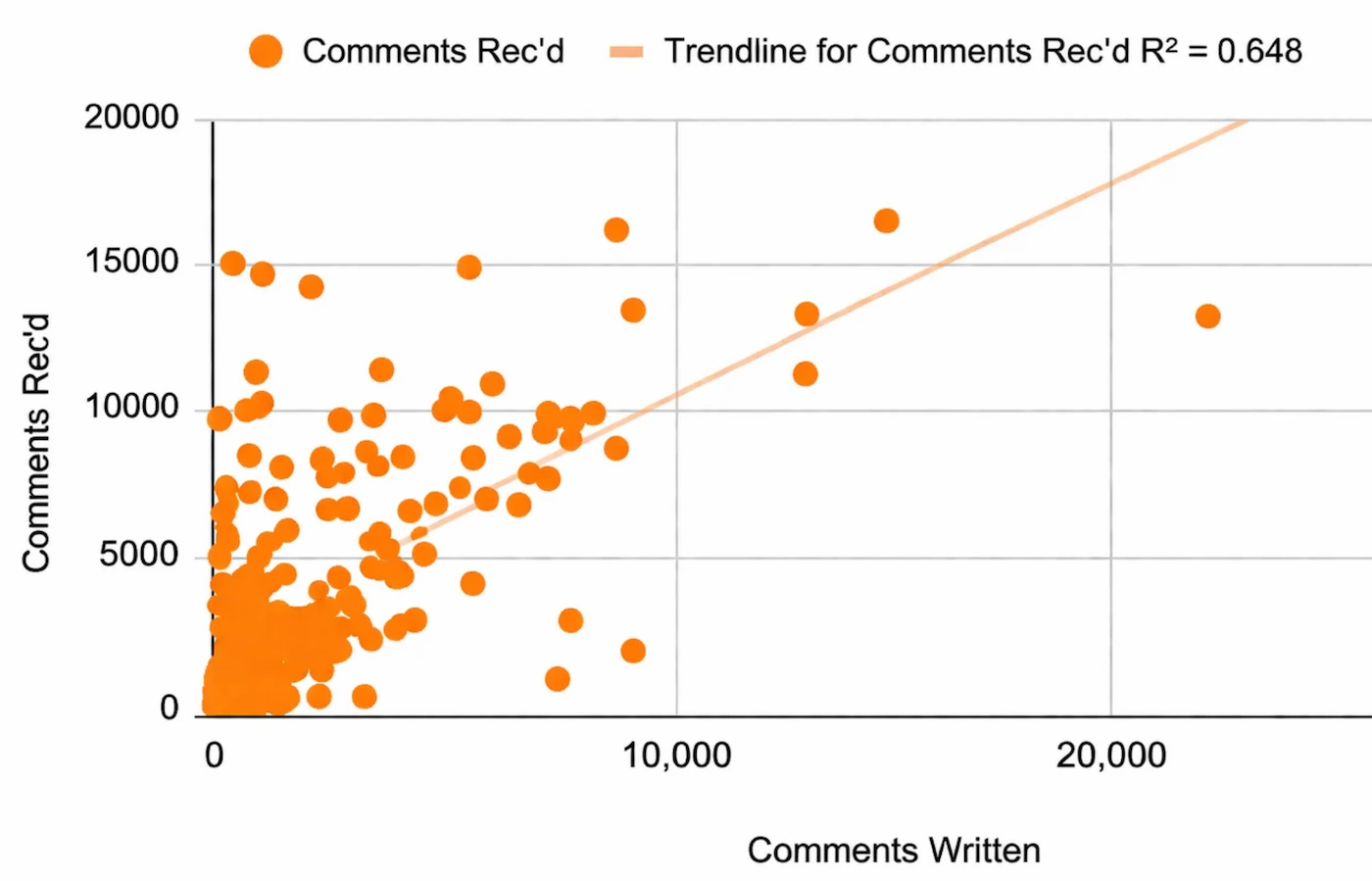
Definitively yes. Our data shows a strong bidirectional relationship (r=0.57) between how much you comment and how much engagement your own posts receive. The top 5% of creators by reach are mostly gaining followers, not connections: a sign they've built real pull. Reach itself is noisy and shifts with every algorithm update. Engagement from the right people is a far more stable signal of actual business traction.
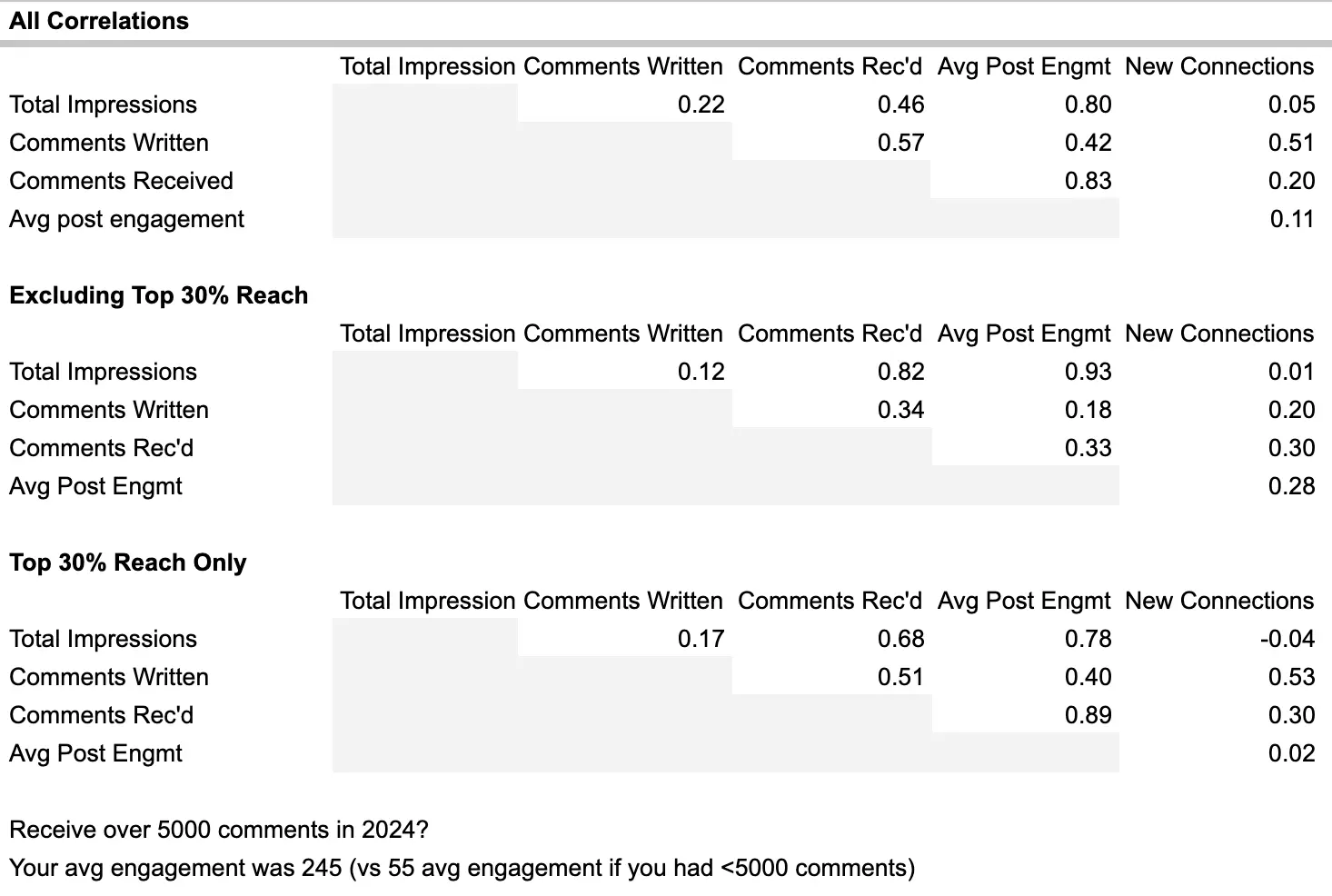
Commenting More Is Correlated With Receiving More
My own profile data: 55.9% of appearances from posts, 41.5% from comments. My posts cleared 1.3M views in the past year; that 41.5% isn't coming from a low post-reach baseline. Comments are doing real work. Don't treat them as an afterthought.
3. Timing, Cadence, and Format: What the Data Shows
What you post matters. So does when you post it, how often, and what format you use. Here are best practices backed by data:
How Often to Post
Consistency beats frequency. A weekly post that says something real will outperform three posts a week of filler. LinkedIn rewards active contributors, but "active" means showing up on a schedule your quality can support, not just showing up often. Most people find 1–3 posts per week is the range where cadence and substance stay high. The data backs this up: weekly posters gain reach year-over-year, while sporadic posters tend to lose it.
Spacing matters too. Back-to-back posts within a few hours tend to cannibalize each other's distribution. Leave at least 12 hours between them. One post that earns real engagement does more for you than two mediocre ones fighting for the same window.
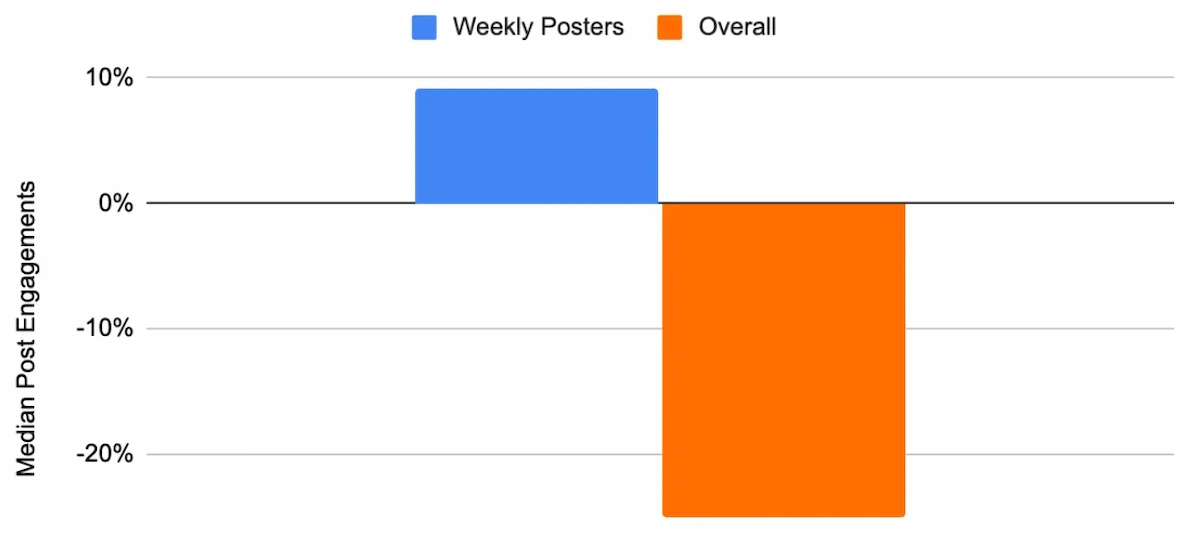
Weekly posters gained 9% median engagement year-over-year. Those posting less frequently lost 25%. The gap compounds.
Posting At Least Weekly Increases Median Post Engagement
When to Publish
Most LinkedIn activity clusters in the work week, and most of that activity happens in the morning. Tuesday and Thursday tend to be the most active days, with the highest density happening before noon, roughly 7–10 AM your audience's time. Midweek mornings are the safest publishing window for most professionals. Weekends are quiet.
That said, if your buyers are healthcare workers, restaurant operators, or primarily based outside North America, pull your own data. The general pattern holds, but what matters most is whether your specific audience is actually online when you publish; that's what drives the early engagement that determines how far a post travels.
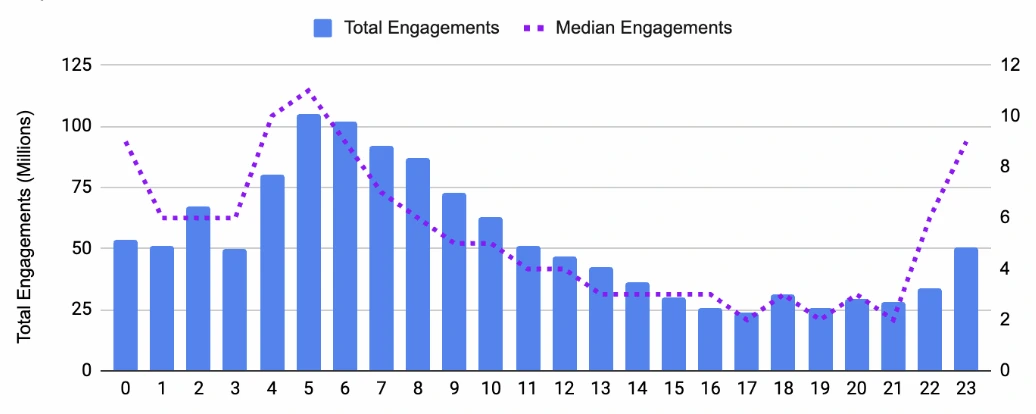
What our data shows: For US and Western European audiences, engagement picks up sharply around 7 AM Eastern, peaks between 8 and 9 AM, then trails off through the afternoon. There's a secondary lift as European time zones come online, and the cycle resets the following morning.
Best Time Of Day To Post
Which Formats the Algorithm Favors
LinkedIn's algorithm doesn't treat all posts equally. Format matters because different content types produce different dwell time and engagement patterns. Here's how to think about each. (For inspiration on what to actually post, see our guide to 22 types of LinkedIn posts that work well.)
Text Posts: Lead With a Strong Hook
Text is underrated. A well-constructed post with a sharp first line can outperform polished visual content if it gives people a reason to read past the fold. That first line or two determines whether someone hits "see more" or keeps scrolling; treat it like the only sentence that's guaranteed to be read. Short paragraphs help, especially for anyone on mobile.
Video Content
Video content surged in late 2024, but the algorithm has since recalibrated. Native video now gets roughly 30% less reach than a comparable text post. This is the opposite of what many guides still claim. That doesn't mean skip video: it's still valuable for trust-building and brand presence. Just don't expect an impressions windfall from it anymore. Short, authentic videos (1–3 minutes) still drive strong engagement when the content is genuinely useful.
Documents and Carousel Posts
Document posts (carousels) are currently the top-performing format, getting roughly 30% more reach than text-only posts. The algorithm rewards the dwell time that comes from swiping through slides. If you have data, a framework, or a step-by-step process worth sharing, a carousel is your best bet. Static images also tend to outperform text on reach, though not as dramatically as documents.
Polls
Polls are low-friction: voting takes one tap, which lowers the barrier to participation significantly. A vote also registers as an engagement signal and can surface the poll to a voter's connections. Deploy them occasionally to generate signal or gather data, not as a default posting strategy.
Articles and Newsletter Posts
LinkedIn Articles and Newsletters sit outside the main feed and build value slowly: they're more about long-term SEO and subscriber relationships than immediate reach. Don't start a newsletter to build an audience; start one once you already have one. It's a format that rewards an existing base, not a mechanism for creating one from scratch.
External Links
LinkedIn still modestly penalizes posts with outbound links, but the effect is much smaller than it used to be. Our advice: don't overthink it. Post your link directly in the body of your post if it's relevant. The friction of the "link in comments" workaround isn't worth it anymore. Save the comments trick for when you genuinely want to maximize reach on a post that doesn't need a link to stand on its own.
The Format Conundrum: Is There a "Best"?
No single format wins universally. The averages in any study are shaped by outliers and different creator types. What actually determines format performance for you is whether you can produce it at a high level, and whether your specific audience responds to it. Figure out what you execute well, verify that your audience engages with it, and do more of that. Chasing whatever the algorithm is supposedly favoring this quarter is a distraction.
4. LinkedIn Ads Algorithm: What It Rewards (and When to Use It)
The LinkedIn ads algorithm is a relevance auction. LinkedIn scores every ad on how much users engage with it (CTR, dwell time, conversion rate), then weighs that score against your bid to decide what gets shown. The practical implication: ads built on content that's already proven organically consistently outperform cold creative. The platform is literally rewarding you for already knowing what resonates with your audience. If you haven't figured that out yet via organic posting, paid is just paying for faster failure.
LinkedIn's targeting is genuinely excellent for B2B: job title, seniority, company size, industry, skills, with a precision that Facebook and Google can't match for professional audiences. But CPCs run $5–15 for most B2B segments, and the algorithm needs real budget ($50–100+/day minimum) to learn effectively. Going in too thin burns money and teaches you nothing.
Spend time dialing in your organic content first: the formats, hooks, and core message. Once you know what resonates, ads amplify it. Don't put the cart before the horse.
5. Search and Profile Visibility
Posting content is only half of it. Your profile also needs to show up when people search. Here's how LinkedIn ranks profiles and what you can do to get found:
Load Your Profile With Relevant Keywords
LinkedIn's search works more like a database query than a Google crawl: it matches search terms against the text in your headline, About section, job titles, and skills. If the words people use to find someone like you aren't in your profile, you won't appear. A headline that reads "B2B SaaS Founder | Revenue Operations | Go-to-Market" will surface in far more searches than "Founder & CEO."
The Skills Section as a Keyword Index
Your skills list is essentially a keyword index. LinkedIn surfaces profiles in search partly based on which skills are listed and how many endorsements they have. You can add up to 50. Fill them with terms that reflect what you actually do and what your buyers would search for. The top three are the most prominently displayed, so make those count.
Network Proximity Shapes Results
Search results aren't universal: they're filtered by your network proximity. First-degree connections appear ahead of second-degree, who appear ahead of everyone else. The practical implication: connecting with more people in your target market doesn't just expand your content reach, it makes your profile more findable to people adjacent to those connections.
Active and Current Profiles Rank Better
Active profiles tend to surface more often. Anecdotally, regular posting and engagement appears to give the algorithm a positive signal about profile relevance. Keep your profile updated too: stale job entries and outdated summaries likely hurt you compared to profiles that clearly reflect current work.
Custom URL and a Keyword-Driven Headline
Claim your custom URL (linkedin.com/in/yourname): it's cleaner to share and marginally better for Google indexing of your profile. Your headline should do real keyword work, not just state your title. A formula worth stealing: "What you do | Who you help | What outcome you create." We've put together a full guide to LinkedIn headline examples if you want to see what works across different roles.
Use the Search Appearances Dashboard
LinkedIn shows you a "Search Appearances" count in your profile dashboard: how many times you showed up in search that week, which companies the searchers were from, and what keywords they used. If those keywords don't match what you want to be found for, that's your signal to rewrite the relevant sections. Treat it like a lightweight SEO audit you can run anytime.
6. Building a Relevant Network
A bigger, more relevant network means more people see your posts, and more potential customers end up in your orbit. (For a deep dive on the mechanics of connection growth, see our guide on how to get more LinkedIn connections.)
Mass-connecting indiscriminately isn't neutral; it muddies the algorithm's model of who you are and who should see your posts. Be deliberate about who you connect with.
1. Add a Note Only When You Have a Real Reason
If you have no specific reason to connect, skip the note. Notes are for real context: you just got off a call, met at an event, have a specific mutual project. A cold note with no reason to be remembered gets ignored.
When you do send a note, make it clearly specific to them. AI-generated connect requests and hollow references to their "recent post" are obvious. A 15-word honest note beats a 60-word manufactured one every time.
2. Show Up in Their Conversations
Connection count is a vanity metric. The goal is a smaller, higher-quality network where people actually know who you are. Comment on their posts with something worth reading. DM when you have a real reason to. Show up consistently in the conversations that matter in your space.
A well-placed comment on a 2nd-degree connection's post puts your name and headline in front of their entire audience, often hundreds or thousands of people who've never encountered you before. Write something that genuinely adds to the conversation and some of those people will click through. This is one of the most underrated growth mechanisms on the platform. If you're thinking about which people to prioritize, our guide to finding influencers on LinkedIn covers how to build that list.
3. Groups: A Largely Wasted Feature
In all the years I've been on LinkedIn, I've yet to meet a serious operator who credits a group with meaningful business results.
LinkedIn Groups have the right concept and the wrong execution. Most are overrun with promotional posts and recycled content. The people making purchasing decisions aren't there. If you find one that's genuinely active and relevant to your space, consider it a pleasant exception.
4. Real Relationships Take Time
The public work (posts, comments, reactions) is the top of the funnel. The actual relationship gets built in the DMs, on the call, over coffee. Don't confuse LinkedIn activity for a relationship. It's how you start one.
Cold-pitch DMing new connections is the LinkedIn equivalent of handing someone your business card and immediately asking them to buy something. Your network grows when people genuinely want to follow you, which happens when you're consistently useful and visible in the conversations that matter to them.
One trend to be aware of: automated voice notes. It's here. It will be advertised to you. Don't use it.
7. LinkedIn as a Business Channel
Does Your Industry Change the Strategy?
The algorithm itself doesn't operate differently by industry: reach, dwell time, engagement velocity, and comment quality matter the same whether you're in SaaS or healthcare. What changes is what your specific audience finds valuable enough to engage with, and what the unspoken content norms are in your corner of LinkedIn.
B2B professionals in marketing, consulting, and SaaS skew toward first-person takes and conversational storytelling. Finance and legal audiences expect precision and data. Creative professionals get more traction when they connect their craft to business outcomes: a designer writing about managing client feedback outperforms a portfolio post. Tech companies often benefit from employee advocacy: when multiple team members post and engage in the same window, the algorithm reads the cluster of activity as signal and amplifies it. None of this changes the fundamentals. Post substantively in your niche, engage with your community consistently, and let the algorithm figure out who else should see your work.
Reach and engagement matter, but they don't pay the bills on their own. Think of them as prerequisites: you can't build a business from LinkedIn without any attention, but attention alone doesn't close deals. You still need to be saying something worth paying for.
From what we've seen, a LinkedIn presence breaks down into two things: what you're actually saying (do you know your stuff? do people in your field trust your perspective?) and how you're presenting it (is it well-designed? visually consistent? using different media types?). Most people are weak on one or the other. Very few nail both.
What is Necessary vs. Optional for Growth?
To grow a business via LinkedIn presence as the distribution channel, you do need attention. You get that, of course, by posting and engaging.
If you do a lot of consistent posting and engaging, AND the substance of what you are posting and engaging is high, meaning professionals in your industry think your contributions are relevant, meaningful, insightful, then you have a much better chance at making a lot of money on LinkedIn.
Substance is the floor. You can have the most polished carousel on LinkedIn, but if there's nothing real behind it, it won't convert.
Add strong production quality on top of that and you have a combination that's genuinely hard to compete with. Most people have one or the other. Having both is a real edge.
What about posting memes, viral workplace takes, and generally vapid content? You might build a large following. You're unlikely to build a business from it. There's a narrow path to sponsorship revenue if your numbers get big enough, but it's a low-ceiling game and not an asset you can exit.
Three Paths to Revenue on LinkedIn
Here are the paths to business growth on LinkedIn, in order of likelihood of success:
- Substance + polish: high-quality content, strong engagement (Revenue ceiling: high six to mid seven figures)
- Substance + casual presentation: real expertise, less production (Revenue ceiling: mid six to low seven figures)
- Gloss without substance: high volume, low depth (Revenue ceiling: low to mid six figures)
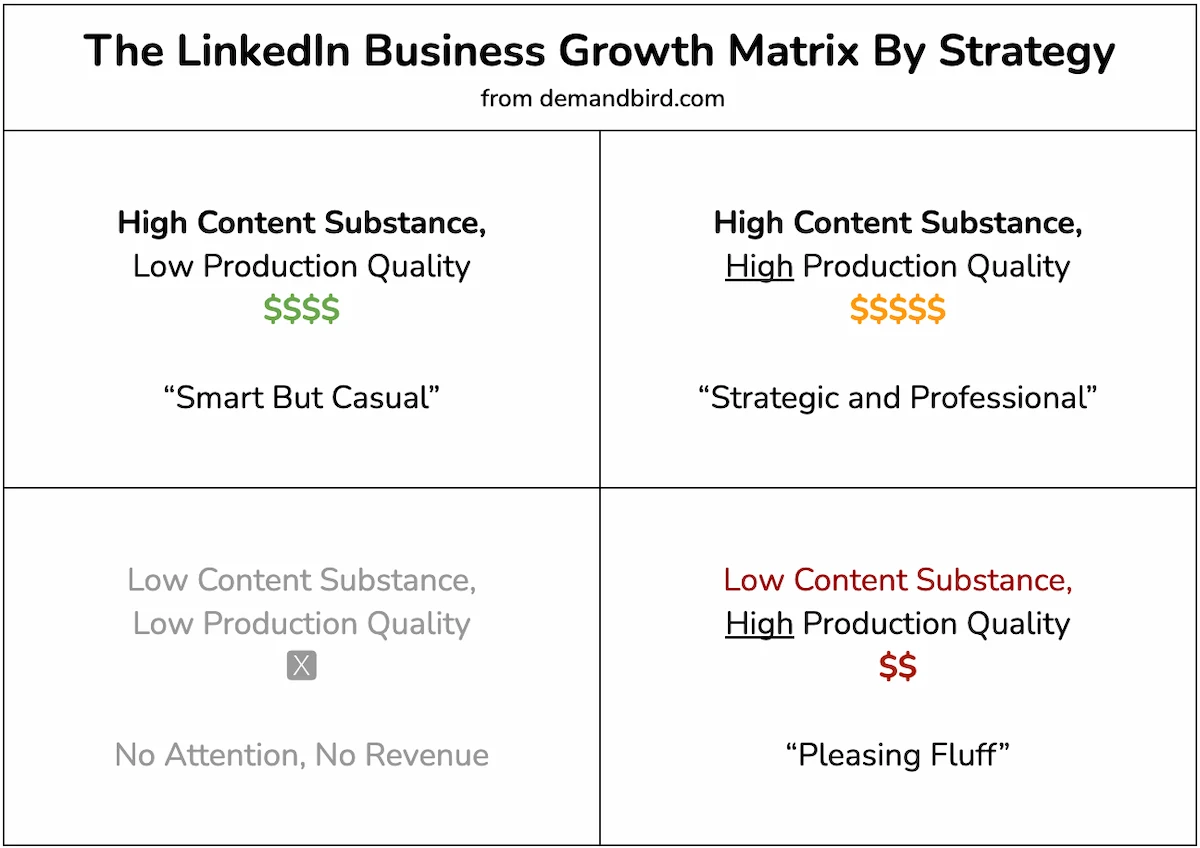
The only guaranteed path to failure: low substance and low effort. Everything else is workable from here.
8. Creator Workflows by Stage
Knowing all of this is one thing. Actually building the habit is another. Here's how I'd approach it at three different stages of LinkedIn investment:
Beginner — Starting Out
At this stage, substance beats polish. Write one real post a week and spend more time commenting than publishing.
Build Your Core Message → Show Up Consistently → Move Conversations Offline
- Before anything else, get clear on your one main point. Most new creators try to cover too much ground, hopping between topics, formats, and framings. Pick the idea that is most true and most useful to the people you want to reach, and approach it from different angles over time. Consistency on a single theme is what builds a reputation.
- Publish at least once a week. Write 5–10 comments a day on posts by people who are active in the space you sell into. Keep comments specific and short: 10–40 words. Not flattery, not filler: something that actually adds to the conversation.
- Treat it like any professional community: a conference, an industry dinner. If someone says something interesting, respond publicly. If the conversation is going somewhere, take it to DMs or a call. This is just networking, with a keyboard.
Intermediate — Building Traction
At this stage you have a sense of what lands. You're seeing traction: connections turning into conversations, conversations turning into deals. Now you scale what's working.
- Update your messaging based on what's generating real business conversations, not just engagement. The market tells you constantly what resonates. Listen and sharpen accordingly.
- Step up the volume. Move to 2–3 posts per week, targeting your core posting window: 9:00–11:30 AM ET for a US audience, 6:00–8:00 AM CET for European. Write 10–15 comments in the 30–60 minutes before you post: it primes your distribution and gets you visible to relevant people right before your own content goes live.
- Invest in visual consistency. At this stage a defined visual identity starts to matter: a color system, a template set, a recognizable look. You might also bring in outside help for topic ideation, ghostwriting, or tightening your hooks. Production quality compounds with credibility over time.
Advanced — Scaling Up
The advanced stage is less about individual posts and more about infrastructure. You're running LinkedIn like a content operation, with multi-million dollar revenue attribution as the target:
- Content system. At 5–7 posts per week, you can't wing it. You need a system: your core strategic message broken into themes, each theme expressed across multiple formats, repurposed and rotated over time. This is how you sustain volume without burning out or repeating yourself verbatim.
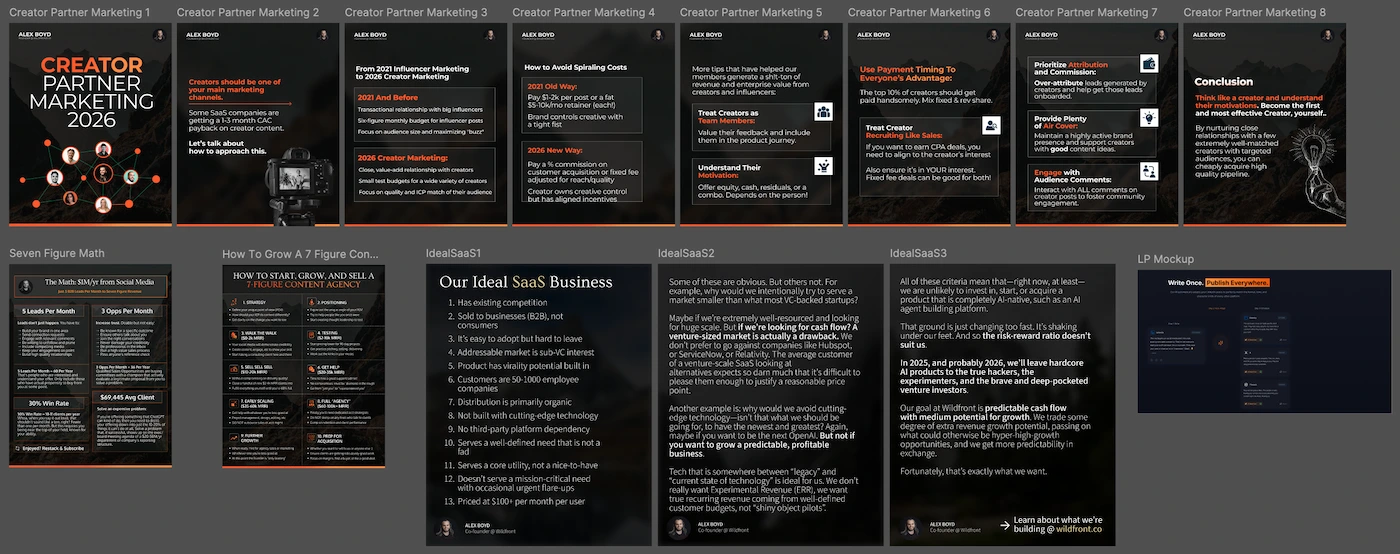
- Production quality. Substance and polish need to meet. That means proper video setup, a real design system, and likely a team: a fractional editor, a brand designer, maybe an on-camera coach. Your output should look genuinely impressive, not just consistent.
- Industry footprint. You're past just your own feed. You're guesting on podcasts and repurposing it for LinkedIn, speaking at events, writing the terminology that other people in your industry start using. Your LinkedIn presence becomes the hub of a wider platform.
Nobody starts at the advanced level. Build the habit first, and let the rest compound from there.
9. Avoiding Burnout
Burnout Kills This Process
The fastest way to quit LinkedIn is to do too much too soon. I've watched it happen many times: someone reads a guide like this, decides to go from zero to posting five days a week with branded carousels and a daily commenting habit, and burns out in six weeks, before anything has had time to work.
The content becomes the job, instead of the means to the job. You spend all your energy on production and none on the actual people you're supposed to be connecting with.
The whole point of being on LinkedIn is getting in front of the right people and building real relationships with them. That doesn't happen fast. In most cases it takes a few months of consistent presence (showing up weekly, engaging genuinely) before anything that looks like a business result materializes: an inbound lead, a conversation that goes somewhere, a connection with someone you'd actually want to work with.
Start at the beginner level. Notice what gets traction. Build from there. A LinkedIn presence that genuinely drives business growth takes time to develop, not because the platform is slow, but because trust is. Steady beats sprinting here every time.
Final Thoughts
More of LinkedIn's feed is becoming paid inventory; that's visible in their revenue numbers, and our data confirms it. Organic reach is more competitive than it was two or three years ago. What hasn't changed is what actually works: showing up with something real to say, consistently, to an audience that finds it worth their time.
At the same time, reach alone doesn't build a business. Substance and the right audience matter more than impressions. Once you know what resonates, that's when it makes sense to invest in production quality, video, or agency help. Not before.
And go slowly enough not to burn out. Results take time, and rushing the process is the fastest way to abandon it before it works.
Very best,
Alex Boyd, DemandBird
Sources: Data referenced in this guide comes from our own research on LinkedIn creator performance in 2025–2026, LinkedIn's published best practices, and social media engagement studies from that period.
Want to grow faster on LinkedIn?
DemandBird helps B2B teams turn LinkedIn activity into pipeline: engagement analytics, content strategy, and more.
Start Free Trial