
The LinkedIn SSI Score is one of those metrics that's easy to obsess over and surprisingly hard to know what to do with. So let me save you some time up front: the score is a readout, not a lever. Focusing on it directly is like trying to get fit by reading the scale every morning. The scale doesn't care.
But the underlying habits the SSI measures? Those actually matter. Below is a clear-eyed look at what the SSI is, what each pillar represents, and how to use it as a diagnostic, not a goal.
- LinkedIn's SSI Score measures your activity across four pillars: Establishing a Professional Brand, Finding the Right People, Engaging with Insights, and Building Relationships
- It's a correlation, not a causation: don't optimize for the score itself; optimize for the underlying behaviors
- Higher SSI is associated with better content reach and more networking opportunities, but the algorithm is the real driver
- The most useful thing to do with your SSI: identify your lowest-scoring pillar and ask what specific behavior would move it
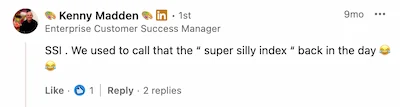
This comment from Kenny Madden adequately sums up my opinion on the LinkedIn SSI:
Does SSI actually influence your professional brand?
There's a correlation between SSI and LinkedIn outcomes, particularly for sales professionals. The habits the score tracks (profile quality, strategic connecting, consistent engagement, relationship depth) do produce results when done well.
But targeting the SSI number itself is a category error. The right approach: use the score to diagnose which behaviors you're neglecting, then address those behaviors directly. The number improves as a consequence.
What is your LinkedIn SSI Score?
The LinkedIn SSI (Social Selling Index) is a score from 0 to 100 that measures your effectiveness across four pillars of professional activity. You need to be logged into your LinkedIn account to view it: find it at linkedin.com/sales/ssi.
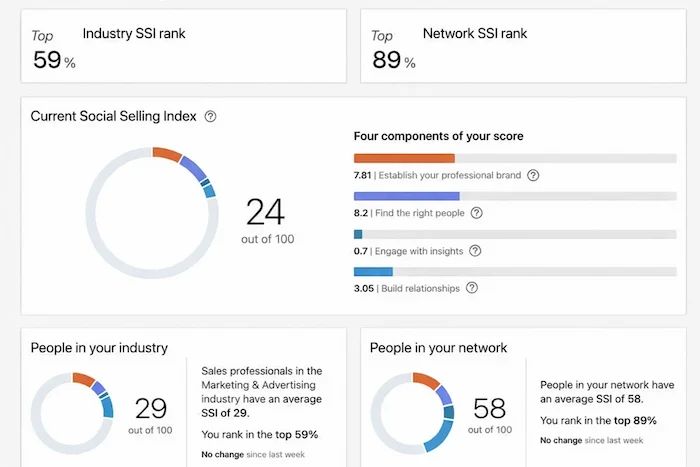
Each pillar maps to a set of observable behaviors: your profile completeness, the types of people you connect with, how often you engage with relevant content, and the strength of your relationship-building activity. LinkedIn's algorithm is watching all of these whether you look at your SSI or not: the score is simply a readout of what's already happening.
Establishing your professional brand
This pillar starts with the basics: a professional photo, a headline that does more than list your job title, and a summary section that actually says something. Before anyone reads your posts, they look you up; what they find either builds credibility or erodes it.
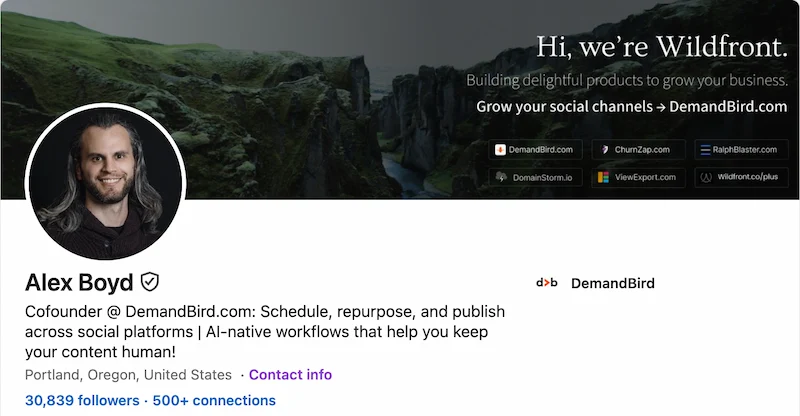
What you post contributes equally. Consistent, relevant content builds an identity over time, one post at a time. Recommendations from colleagues and clients matter too; they're harder to fake than any self-description and carry real weight with people who don't know you yet.
Here are some concrete things you can do to move the needle on this pillar:
| Content & engagement | Profile updates | Networking |
|---|---|---|
| Write a high-quality post | Update your summary | Connect with 10 relevant people |
| Comment on a trending topic | Update your profile photo | Engage with 10 posts in your niche |
| Share a short demo or product video | React to your organization's content | Record a short insight from a conference |
Finding the right people
The goal isn't to amass connections: it's to build the right kind of relationships. Connections (lowercase c) that allow you to support others and be supported by them over the course of a career. Quality over quantity applies here as much as anywhere on LinkedIn.
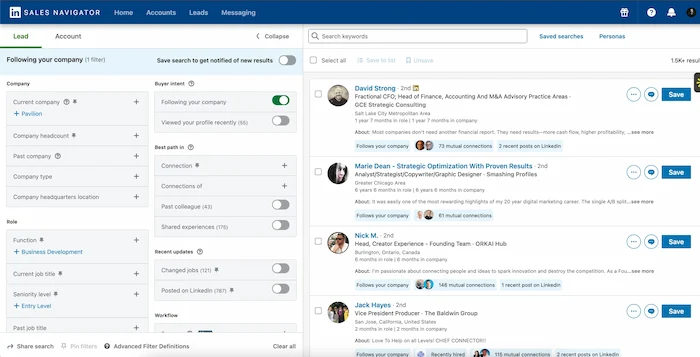
If you have Sales Navigator, its filtering tools let you target systematically by seniority, company size, or industry. Without it, organic approaches work fine: show up consistently in conversations where the right people are already participating, and follow through when someone engages with you. For a structured approach, see our guide to getting more LinkedIn connections.
Lead with value. The most enduring professional relationships start with someone helping or teaching, not asking. Be the person who gives before requesting, and the reciprocity follows naturally.
Engaging with insights
Engagement signals active participation, not just presence. What you share should have a point: a clear perspective, useful data, or something that gives your network a reason to respond.
Comments deserve the same standard. Skip anything generic. The LinkedIn algorithm weighs substantive comments differently from one-word responses, and the people reading them do too. Add something to the conversation or don't comment at all.
The goal is to be recognizable as a thoughtful contributor in your field, not simply an active one. Daily engagement is great if the quality is there; less frequent but more substantive engagement beats daily noise.
Building relationships
Depth matters more than volume. A smaller network of people who genuinely know your work will do more for your career than a large one built on shallow exchanges. If you're just collecting names, you're not building relationships.
Personalize your connection requests where it makes sense: reference something specific you have in common, or a genuine reason for connecting. Or, counterintuitively, send no note at all. A blank request often outperforms a generic one.
Stay in touch in ways that don't feel transactional. Acknowledge real milestones with a personal note rather than a platform auto-message. Check back in after a project wraps up. Consistency over months and years is what turns a contact into a real professional relationship.
Influencers vs. relationships
For most B2B professionals, the connections that actually move the needle aren't with the platform's biggest accounts. They're with people who have smaller followings but genuine decision-making authority at the organizations you're trying to reach: the people who approve budgets and make referrals.
Engaging with Justin Welsh makes sense if you're building a creator brand. If your goal is to win clients in supply chain, his audience isn't your audience. For most professional contexts, targeting smaller, more relevant creators is a better use of your engagement time:
| Your goal | Right fit |
|---|---|
| Maximum follower count, fast | Large influencers |
| Selling books, courses, or brand sponsorships | Large influencers |
| Building broad name recognition | Large influencers |
| Followers who match your ICP | Micro-influencers |
| Closing B2B deals at mid-market or enterprise | Micro-influencers |
| Pipeline and revenue over vanity metrics | Micro-influencers |
Creating a strong LinkedIn profile
The SSI treats your profile as a proxy for how seriously you take your professional presence. More practically, it's what anyone checks before agreeing to meet, refer, or buy. A profile that's vague, outdated, or incomplete loses that moment.
A professional headshot is the starting point: profiles with a real photo read as more credible before anyone has read a word. Write a headline that does more than list your job title; it should convey your expertise and who you help. Your summary is the place to tell a story: what you do, who you serve, and what differentiates you.
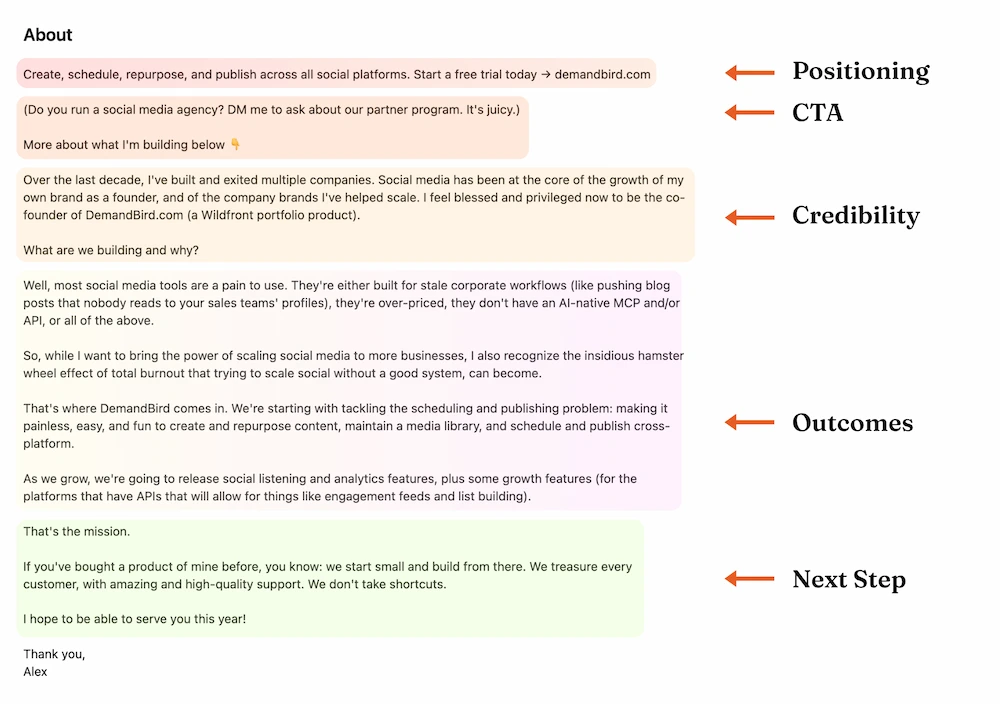
Sprinkle relevant keywords naturally through your headline, summary, and experience sections to surface in LinkedIn searches. Fill in your experience and skills completely rather than leaving placeholders. And ask for recommendations from people who can describe your actual work; those carry far more weight than skill endorsements, which anyone can click.
Sharing and commenting on relevant content
When you regularly surface useful information, you become someone worth following. Industry news, clear takes on trends, or practical perspectives all work. The key is that it has to be genuinely useful, not just frequent.
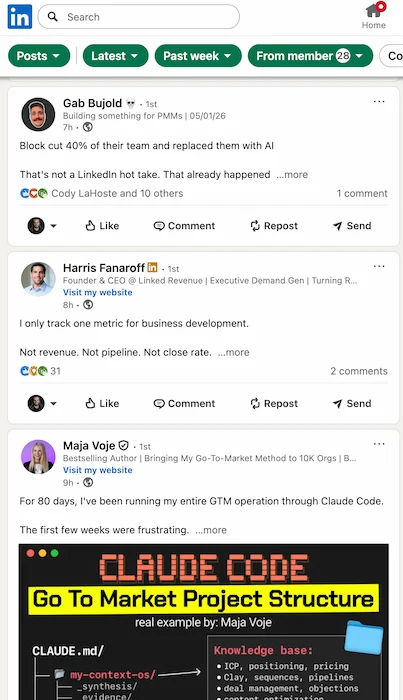
Commenting substantively on posts from peers and potential clients keeps you visible and demonstrates expertise in real time. Seek out conversations where your perspective actually adds something.
Volume without substance is counterproductive. Activity for its own sake will not improve your SSI, and it will not build the reputation you're after. Prioritize comments worth reading over comments that simply exist.
Why your SSI score matters
A high SSI score reflects genuine activity, not just account existence. Here's what the research and LinkedIn's own data suggest about why that matters:
- Trust signal. A complete, actively maintained profile reads as legitimate. Sparse or stale profiles get less benefit of the doubt from both the algorithm and the humans who land on them.
- Content reach. Higher SSI correlates with better distribution. This is almost certainly because the behaviors it tracks (engaged connections, consistent posting) are exactly what the algorithm weights when deciding how far to push a post.
- Network quality. A strong SSI usually means you've been selective and intentional about who you connect with. Targeted networks generate better opportunities than large, unfocused ones.
- Diagnostic value. The SSI breakdown by pillar tells you where you're investing LinkedIn energy and where you're not. It's most useful not as an absolute score but as a pattern over time.
SSI and actual business outcomes
LinkedIn's own data suggests professionals with high SSI scores are 45% more likely to exceed quota, and that SSI scores above 70 are associated with 45% more sales opportunities. Take these with appropriate skepticism: they're correlation, not causation. But the underlying behaviors the SSI measures (strong profile, relevant connections, active engagement, genuine relationships) do drive business outcomes on LinkedIn.
For a deeper look at how LinkedIn's algorithm actually weights these signals, our LinkedIn algorithm breakdown covers the data in more detail.
Final thoughts
Use the SSI as a diagnostic, not a scoreboard. Log in, look at your four pillar scores, find the weakest one, and ask yourself what specific behavior change would move it. Then go do that thing, not because it improves your SSI, but because it improves your actual presence on the platform.
Professional relationships increasingly start with someone looking you up online before committing to a call or a meeting. Your LinkedIn profile is that first impression. The SSI gives you a rough read on how well your current habits are setting you up for those moments.
Invest in the habits: show up consistently, engage with substance, and build connections that matter. The score reflects those behaviors automatically.
Write once. Post everywhere.
DemandBird repurposes your best content for every platform and schedules it all automatically.
Start Free Trial →